Welcome to Naty's World
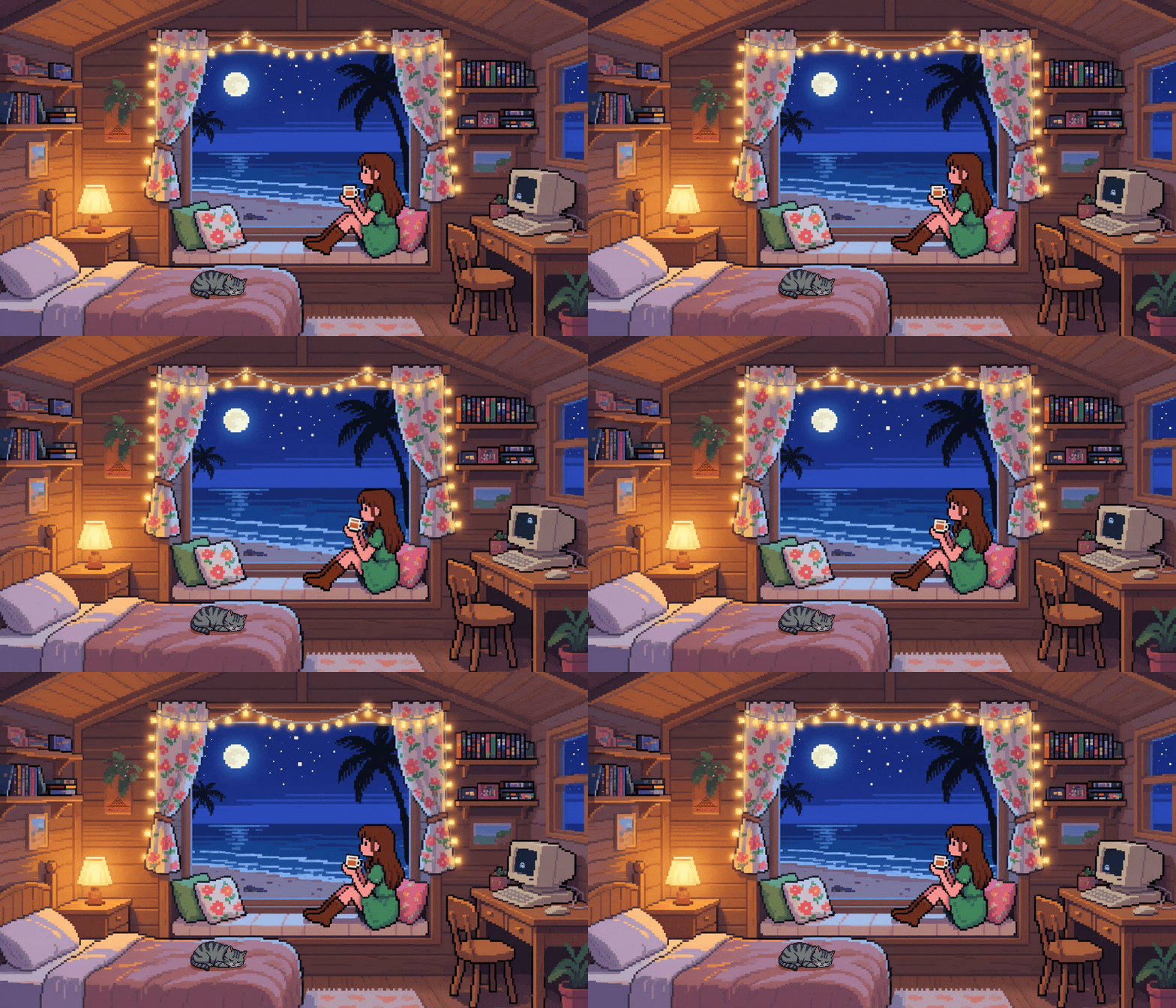
The Cozy Web Manifesto
After the indie web… comes the cozy web.
The internet was already a stressful place long before artificial intelligence showed up. But now it feels like the web took a suspicious dose of digital steroids. Everything is faster, louder, more optimized, more automated… and somehow also more exhausting.
Yes, AI can make things more efficient. Yes, technology can make life easier. But who decided that humans must now move at machine speed?
There is this strange cultural pressure that says: if technology allows something to be faster, we must adapt ourselves to match it.
I disagree.
Technology should adapt to humans. Not the other way around.
Unfortunately, what I see happening everywhere is the opposite. People bending themselves into strange digital shapes just to keep up with the pace of platforms, algorithms, feeds, trends, engagement tricks, and whatever new rule appeared this week.
But here's the inconvenient truth: we are biological creatures. Not software updates.
Our brains were not designed to process a tsunami of notifications, infinite feeds, viral outrage, productivity hacks, and endless content factories.
And yet… that's exactly what the modern web has become.
People are burning out. Mentally. Emotionally. Even physically.
We now have terms like brain-rot and bed-rot. Honestly, the fact that these words even exist should make everyone a little uncomfortable.
Something clearly went wrong somewhere.
The funny thing about humans, though, is that we can tolerate discomfort only up to a certain point. And I strongly suspect we are approaching that point on the internet.
Recently I watched a YouTuber I follow (a very enthusiastic AI fan) create a digital clone of herself so she wouldn't have to record videos anymore.
Technically, it worked. The avatar looked similar. The voice was convincing. The video was perfectly watchable.
And yet… something about it simply didn't work.
It felt like listening to the radio, except the radio had a face that wasn't quite human and a voice that belonged to someone else.
It wasn't offensive. It wasn't terrible.
It was just… weird.
I clicked away without thinking. Not as a protest. Not as rebellion. Just instinct.
The content suddenly felt like what many people online call slop. Even though visually it was completely fine.
Sometimes your brain simply knows when something isn't meant for humans anymore.
And this is where the idea of the cozy web appears.
No, rejecting modern technology entirely isn't realistic. And honestly, it isn't necessary either. Extremes rarely solve anything.
What we actually need is balance.
The cozy web is not about abandoning technology. It is about reclaiming the human experience inside it.
A cozy website can be a blog, an online shop, a personal homepage, a digital garden, a small community, or even a news site focused on positive stories.
The key difference is simple:
The primary goal is human well-being.
Cozy spaces on the web encourage slower exploration. Curiosity. Calm browsing. Genuine interaction.
You visit not to be manipulated into staying… but because you actually enjoy being there.
Today's internet is built around monetization first and everything else later. And monetization requires virality.
Which means content must be shocking, addictive, dramatic, or engineered for clicks.
The cozy web flips this logic.
Monetization may exist (creators deserve to earn money) but it comes as a consequence of good content, not as the primary objective.
In the cozy web, humans create things for other humans using the internet as a tool.
Notice something missing in that sentence?
Algorithms.
The goal is the simple pleasure of sharing something meaningful online.
Knowing that another human cared enough to build a space for you to visit.
Not to please a platform. Not to feed an algorithm. Not to obey the newest SEO commandments.
I lost count of how many creators slowly lost their authenticity trying to survive inside algorithm-driven ecosystems.
You can see it even in video thumbnails.
Serious creators who once produced thoughtful original work now copy the same exaggerated expressions and the same shocked open-mouth pose.
Why does everyone suddenly look like they're about to take a photo for the dentist?
Because the algorithm likes it.
When your income depends on pleasing a machine, creativity becomes secondary.
And when your workplace is owned by someone else, everything can disappear overnight.
Channels vanish. Platforms change rules. Entire careers evaporate in a blink.
Of course people get sick in that environment.
Of course the internet becomes toxic.
The cozy web offers a different path.
Not a revolution. Not a rejection. Just… a correction.
You might have heard the phrase: "Everything is a tool when you know how to use it."
Here is the insight that changed everything for me:
Understanding the difference between a tool and an environment is crucial.
Facebook is not a tool. TikTok is not a tool. Instagram is not a tool.
If you are more at the service of the platform than the platform is at your service… it is not a tool.
Interestingly, AI can be a tool.
I have no problem using it to fix grammar mistakes so I don't embarrass myself in English. I have no problem with AI helping researchers speed up repetitive tasks.
The problem appears when these tools are used to exploit human psychology for easy profit.
No, you don't need to hook me within the first three seconds of a video.
If your content is interesting, I will happily watch three hours.
Not everything on the internet needs to feel like a psychological operation.
This is why the indie web, and now the cozy web, keeps growing stronger every year.
This is also why the analog world is slowly returning. Vinyl records. Film photography. Printed books. Handmade objects.
Humans are rediscovering slowness again.
The cozy web is simply that same instinct applied to the internet.
Spaces made by humans. Spaces made for humans.
Most importantly, spaces owned by their creators.
Here you control your rules, your data, and everything you build. Years of work can travel with you anywhere.
No sudden algorithm changes. No mysterious platform bans. No invisible engagement gods deciding your fate.
Just a website. A person behind it. And another person visiting.
Simple.
The cozy web is the internet where you can feel good being online again.
Think about it for a moment.
When was the last time you browsed the internet without feeling manipulated, judged, rushed, or pulled into an endless vortex of three-second hooks?
Exactly.
After the indie web… comes the cozy web.
The internet was already a stressful place long before artificial intelligence showed up. But now it feels like the web took a suspicious dose of digital steroids. Everything is faster, louder, more optimized, more automated… and somehow also more exhausting.
Yes, AI can make things more efficient. Yes, technology can make life easier. But who decided that humans must now move at machine speed?
There is this strange cultural pressure that says: if technology allows something to be faster, we must adapt ourselves to match it.
I disagree.
Technology should adapt to humans. Not the other way around.
Unfortunately, what I see happening everywhere is the opposite. People bending themselves into strange digital shapes just to keep up with the pace of platforms, algorithms, feeds, trends, engagement tricks, and whatever new rule appeared this week.
But here's the inconvenient truth: we are biological creatures. Not software updates.
Our brains were not designed to process a tsunami of notifications, infinite feeds, viral outrage, productivity hacks, and endless content factories.
And yet… that's exactly what the modern web has become.
People are burning out. Mentally. Emotionally. Even physically.
We now have terms like brain-rot and bed-rot. Honestly, the fact that these words even exist should make everyone a little uncomfortable.
Something clearly went wrong somewhere.
The funny thing about humans, though, is that we can tolerate discomfort only up to a certain point. And I strongly suspect we are approaching that point on the internet.
Recently I watched a YouTuber I follow (a very enthusiastic AI fan) create a digital clone of herself so she wouldn't have to record videos anymore.
Technically, it worked. The avatar looked similar. The voice was convincing. The video was perfectly watchable.
And yet… something about it simply didn't work.
It felt like listening to the radio, except the radio had a face that wasn't quite human and a voice that belonged to someone else.
It wasn't offensive. It wasn't terrible.
It was just… weird.
I clicked away without thinking. Not as a protest. Not as rebellion. Just instinct.
The content suddenly felt like what many people online call slop. Even though visually it was completely fine.
Sometimes your brain simply knows when something isn't meant for humans anymore.
And this is where the idea of the cozy web appears.
No, rejecting modern technology entirely isn't realistic. And honestly, it isn't necessary either. Extremes rarely solve anything.
What we actually need is balance.
The cozy web is not about abandoning technology. It is about reclaiming the human experience inside it.
A cozy website can be a blog, an online shop, a personal homepage, a digital garden, a small community, or even a news site focused on positive stories.
The key difference is simple:
The primary goal is human well-being.
Cozy spaces on the web encourage slower exploration. Curiosity. Calm browsing. Genuine interaction.
You visit not to be manipulated into staying… but because you actually enjoy being there.
Today's internet is built around monetization first and everything else later. And monetization requires virality.
Which means content must be shocking, addictive, dramatic, or engineered for clicks.
The cozy web flips this logic.
Monetization may exist (creators deserve to earn money) but it comes as a consequence of good content, not as the primary objective.
In the cozy web, humans create things for other humans using the internet as a tool.
Notice something missing in that sentence?
Algorithms.
The goal is the simple pleasure of sharing something meaningful online.
Knowing that another human cared enough to build a space for you to visit.
Not to please a platform. Not to feed an algorithm. Not to obey the newest SEO commandments.
I lost count of how many creators slowly lost their authenticity trying to survive inside algorithm-driven ecosystems.
You can see it even in video thumbnails.
Serious creators who once produced thoughtful original work now copy the same exaggerated expressions and the same shocked open-mouth pose.
Why does everyone suddenly look like they're about to take a photo for the dentist?
Because the algorithm likes it.
When your income depends on pleasing a machine, creativity becomes secondary.
And when your workplace is owned by someone else, everything can disappear overnight.
Channels vanish. Platforms change rules. Entire careers evaporate in a blink.
Of course people get sick in that environment.
Of course the internet becomes toxic.
The cozy web offers a different path.
Not a revolution. Not a rejection. Just… a correction.
You might have heard the phrase: "Everything is a tool when you know how to use it."
Here is the insight that changed everything for me:
Understanding the difference between a tool and an environment is crucial.
Facebook is not a tool. TikTok is not a tool. Instagram is not a tool.
If you are more at the service of the platform than the platform is at your service… it is not a tool.
Interestingly, AI can be a tool.
I have no problem using it to fix grammar mistakes so I don't embarrass myself in English. I have no problem with AI helping researchers speed up repetitive tasks.
The problem appears when these tools are used to exploit human psychology for easy profit.
No, you don't need to hook me within the first three seconds of a video.
If your content is interesting, I will happily watch three hours.
Not everything on the internet needs to feel like a psychological operation.
This is why the indie web, and now the cozy web, keeps growing stronger every year.
This is also why the analog world is slowly returning. Vinyl records. Film photography. Printed books. Handmade objects.
Humans are rediscovering slowness again.
The cozy web is simply that same instinct applied to the internet.
Spaces made by humans. Spaces made for humans.
Most importantly, spaces owned by their creators.
Here you control your rules, your data, and everything you build. Years of work can travel with you anywhere.
No sudden algorithm changes. No mysterious platform bans. No invisible engagement gods deciding your fate.
Just a website. A person behind it. And another person visiting.
Simple.
The cozy web is the internet where you can feel good being online again.
Think about it for a moment.
When was the last time you browsed the internet without feeling manipulated, judged, rushed, or pulled into an endless vortex of three-second hooks?
Exactly.